
A poster for a Chinese high-speed train at the construction site for a bridge over the Mekong River in Laos
Upcoming Events
Past Events
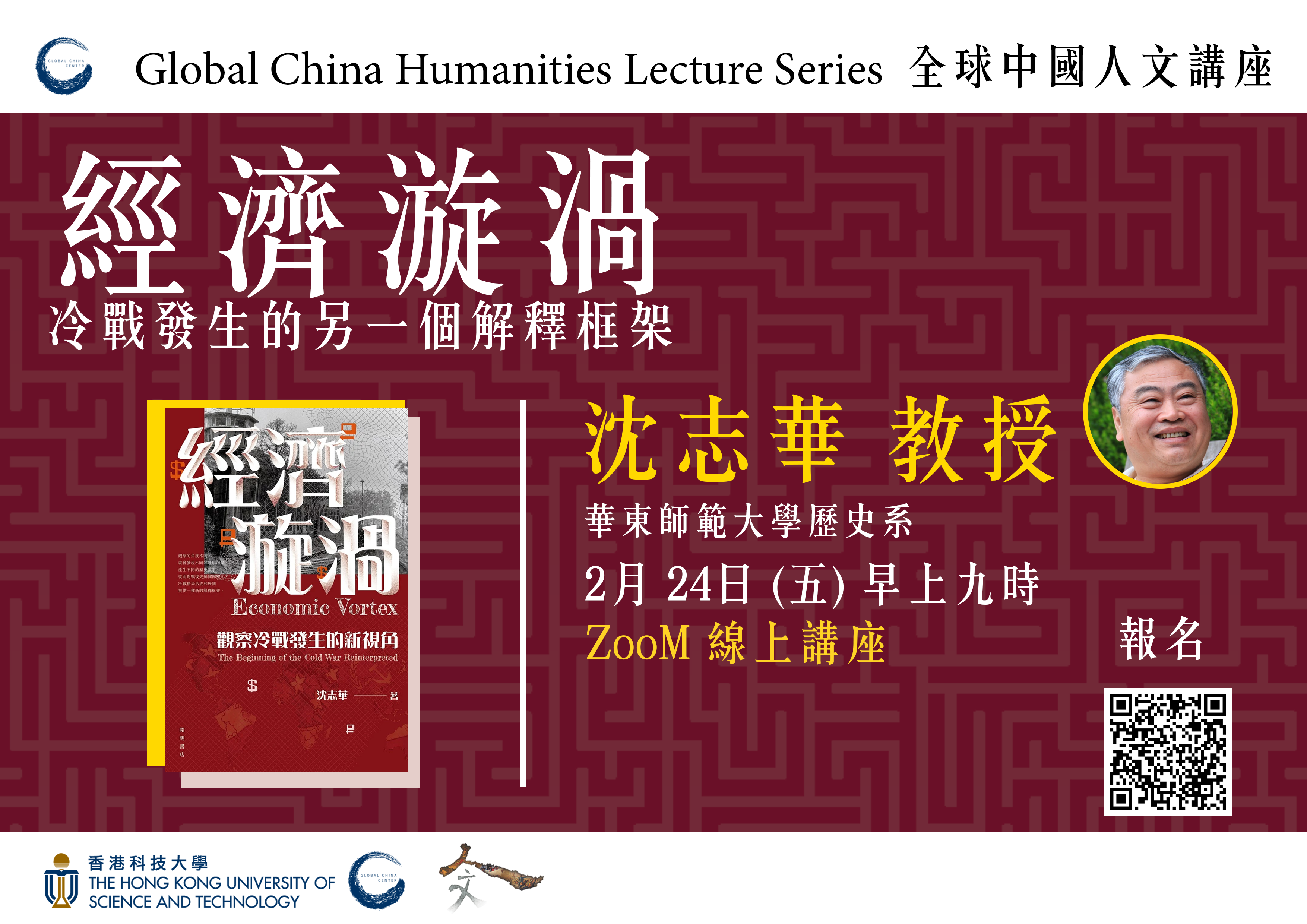
新書講座: 沈志華 — 《經濟漩渦:冷戰發生的另一個解釋框架》
Zoom
從經濟的視角觀察冷戰。過去的研究主要在地緣政治、安全和意識形態問題,可以換一個角度觀察。 安全和經濟兩個車輪,冷戰的發生不在“安全困境”,而在“經漩濟漩渦”。 READ MORE...
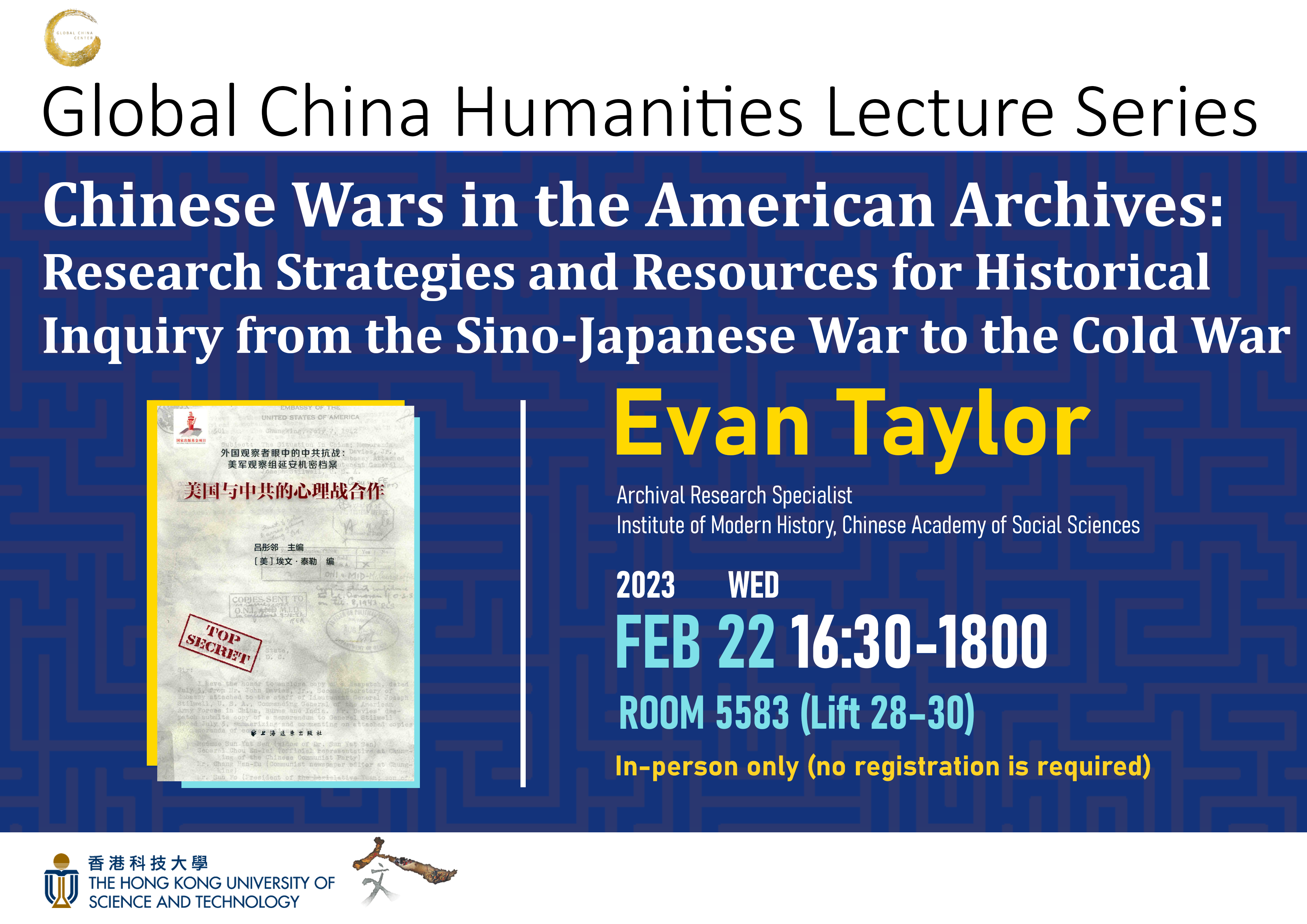
Chinese Wars in the American Archives: Research Strategies and Resources for Historical Inquiry from the Sino-Japanese War to the Cold War
Room 5583
In this talk, Evan Taylor will share archival research methods developed over a decade of work for publishing companies, academic databases, and individual scholarship; how to locate relevant document collections, prepare for a visit to an archive or library, maximize your time on location, duplicate material, and organize it for use in the future. He will also discuss a selection of valuable yet little known primary source collections relevant to the Sino-Japanese War and the Cold War of all media types, from documents to photographs, motion pictures, audio, and maps. This will include an introduction to material such as the color films of the CBI theater shot by OSS field teams, the reports of U.S. military personnel stationed in Yan’an, war planning maps produced by both the U.S. 14th Air Force and the Japanese military, the State Department’s 1950s internal investigation files of Foreign Service Officers in China, CIA recordings of Chinese, North Korean, and North Vietnamese international shortwave radio broadcasts, U.S. Army prisoner of war interrogation reports from the Korean War, and more. READ MORE...
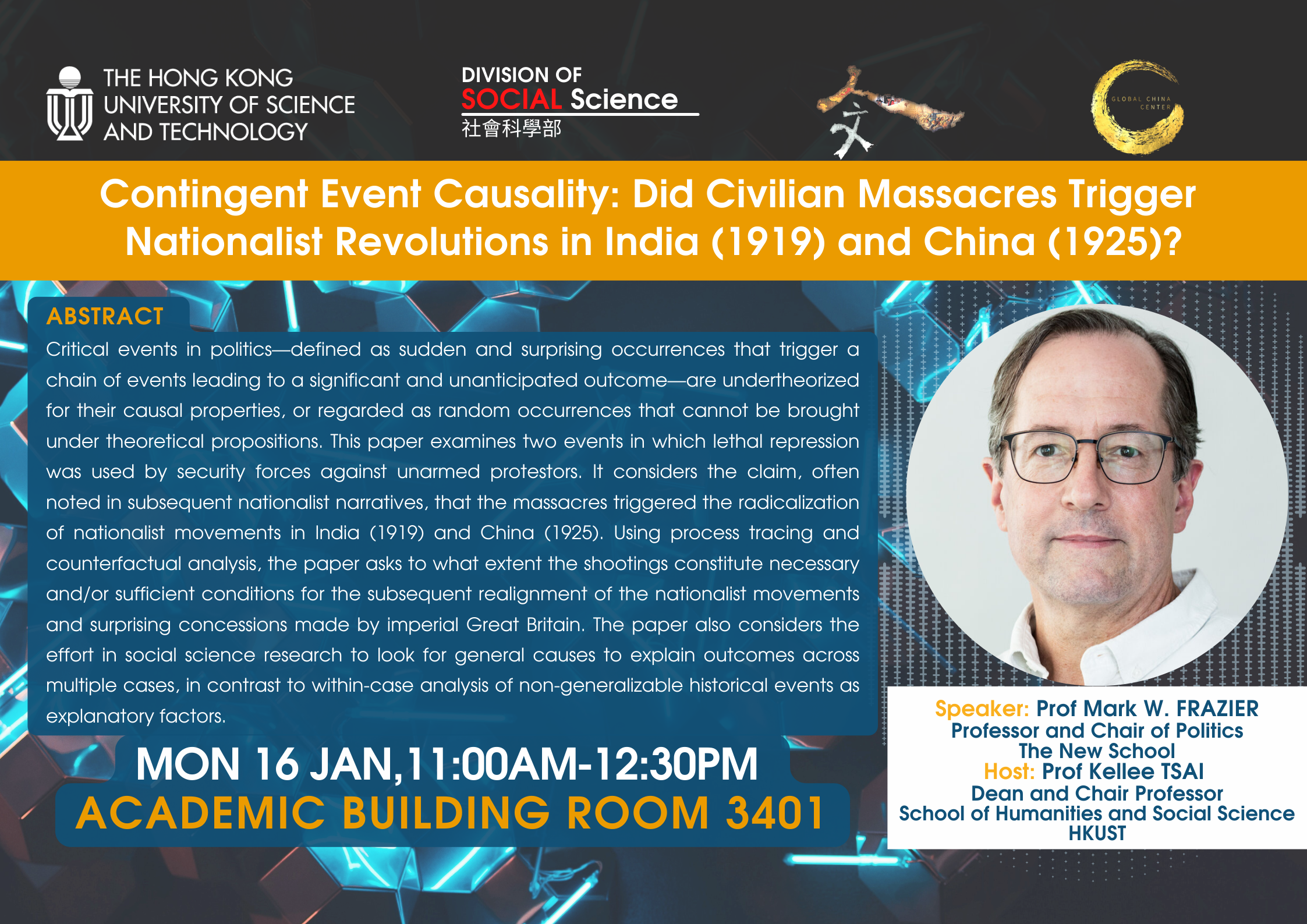
Seminar - Contingent Event Causality: Did Civilian Massacres Trigger Nationalist Revolutions in India (1919) and China (1925)?
Room 3401 (Lift 2 or Lifts 17-18), 3/F Academic Building
Critical events in politics—defined as sudden and surprising occurrences that trigger a chain of events leading to a significant and unanticipated outcome—are undertheorized for their causal properties, or regarded as random occurrences that cannot be brought under theoretical propositions. This paper examines two events in which lethal repression was used by security forces against unarmed protestors. It considers the claim, often noted in subsequent nationalist narratives, that the massacres triggered the radicalization of nationalist movements in India (1919) and China (1925). Using process tracing and counterfactual analysis, the paper asks to what extent the shootings constitute necessary and/or sufficient conditions for the subsequent realignment of the nationalist movements and surprising concessions made by imperial Great Britain. The paper also considers the effort in social science research to look for general causes to explain outcomes across multiple cases, in contrast to within-case analysis of non-generalizable historical events as explanatory factors READ MORE...
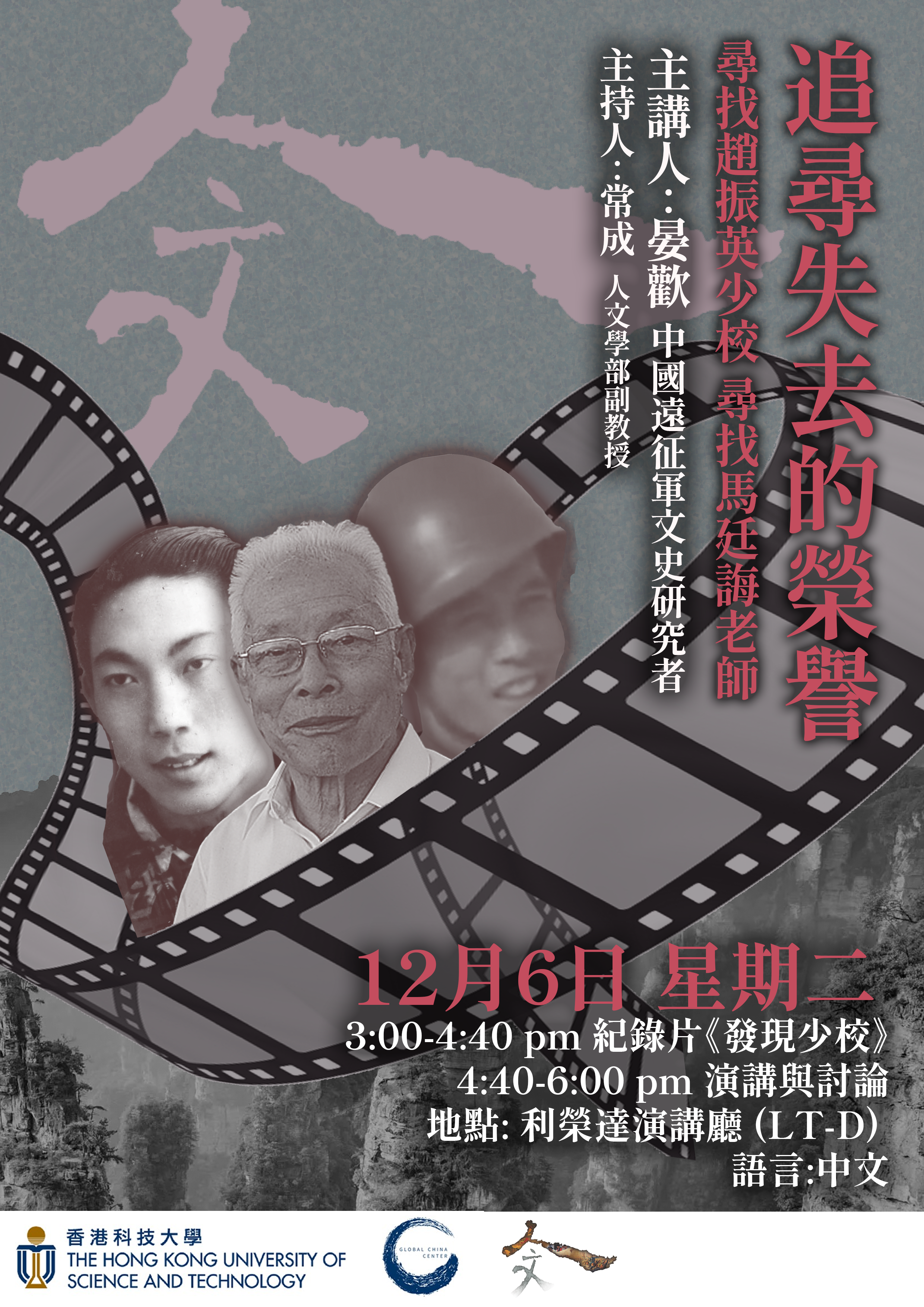
追尋失去的榮譽: 尋找趙振英少校、尋找馬廷誨老師
利榮達演講廳 (LT-D)
1945年9月9日,中國戰區受降儀式在南京舉行,年輕的新六軍少校趙振英在場負責警戒。現場紀錄影像隨後塵封於美國國家檔案館,而趙振英歷盡坎坷,默默無聞地生活在盧溝橋畔。數十年後,抗日將領後代、建築師晏歡受一個紀錄片鏡頭的啓發,從援華美軍家中珍藏的一幅合影和一個小紅日記本開始,追尋數年,終於找到趙振英,與專業團隊合作創作出紀錄片《發現少校》。沉寂半個世紀的趙振英成爲兩岸知名的抗戰老兵,追回失去的榮譽。 READ MORE...
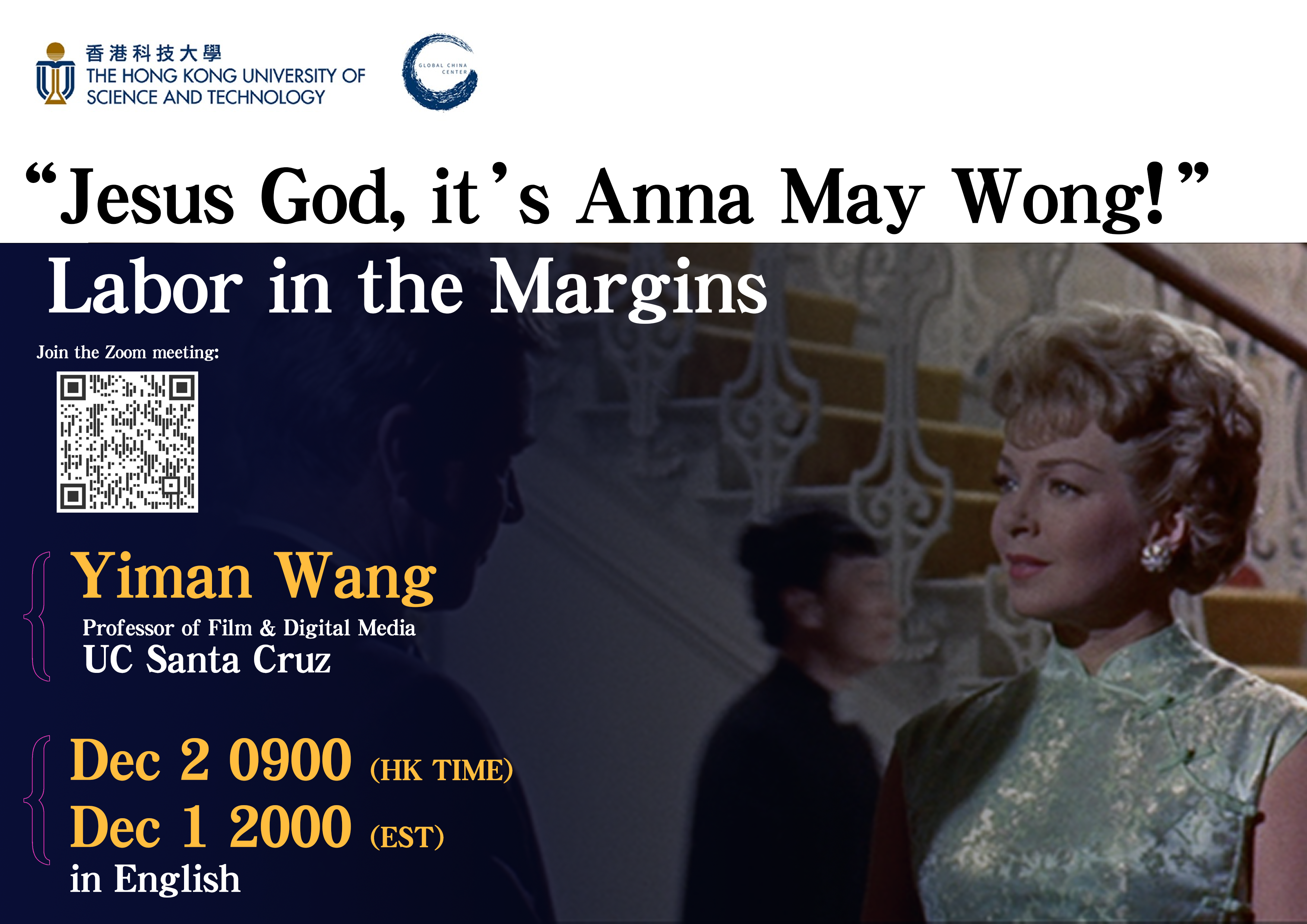
“Jesus God, it’s Anna May Wong!”: Labor in the Margins
to
Zoom
Anna May Wong (1905-1961), the first famous yet marginalized early 20th-c. Chinese American screen-stage-TV performer, is finally getting overdue nationwide recognition in the US, with her image ingrained and memorialized in the newly minted quarter coin issued in 2022 as part of the American Women Quarters Program. Yet, how to grapple with her legacy remains a thorny question. The difficulty has to do with two factors. One: most of her roles were inglorious race-gender stereotypes churned out by the exclusionary and prejudiced Hollywood “dream factory.” Two: not quite a star, Wong spent the majority of her life hustling and playing minor roles, supporting the white female star. Despite her newly minted nationwide recognition, her life-career could hardly be upcycled into a testimony of the “American dream.” So, what exactly is Wong’s legacy, aside from her iconic significance as the first famous Chinese American performer? My presentation takes seriously the fact that the bulk of her career was built upon playing small roles in films and TV shows. Departing from star studies that spotlights the star glamour and the star’s center position on the screen, I refocus on Wong’s leverage of the margins and the background of screen. Shining light on her flitting yet remarkable appearances as a supporting performer, I argue that her unglamorous and belabored performances not only call attention to entertainment industry’s racializing and hierarchizing apparatus, but also reveal how the center stage is both constructed and deconstructed by the peripheries she occupies. In other words, far from a mere victim of the exclusionary entertainment industry, Wong, along with other racialized performers, worked from the margins to challenge white stardom and white heteropatriarchy. READ MORE...
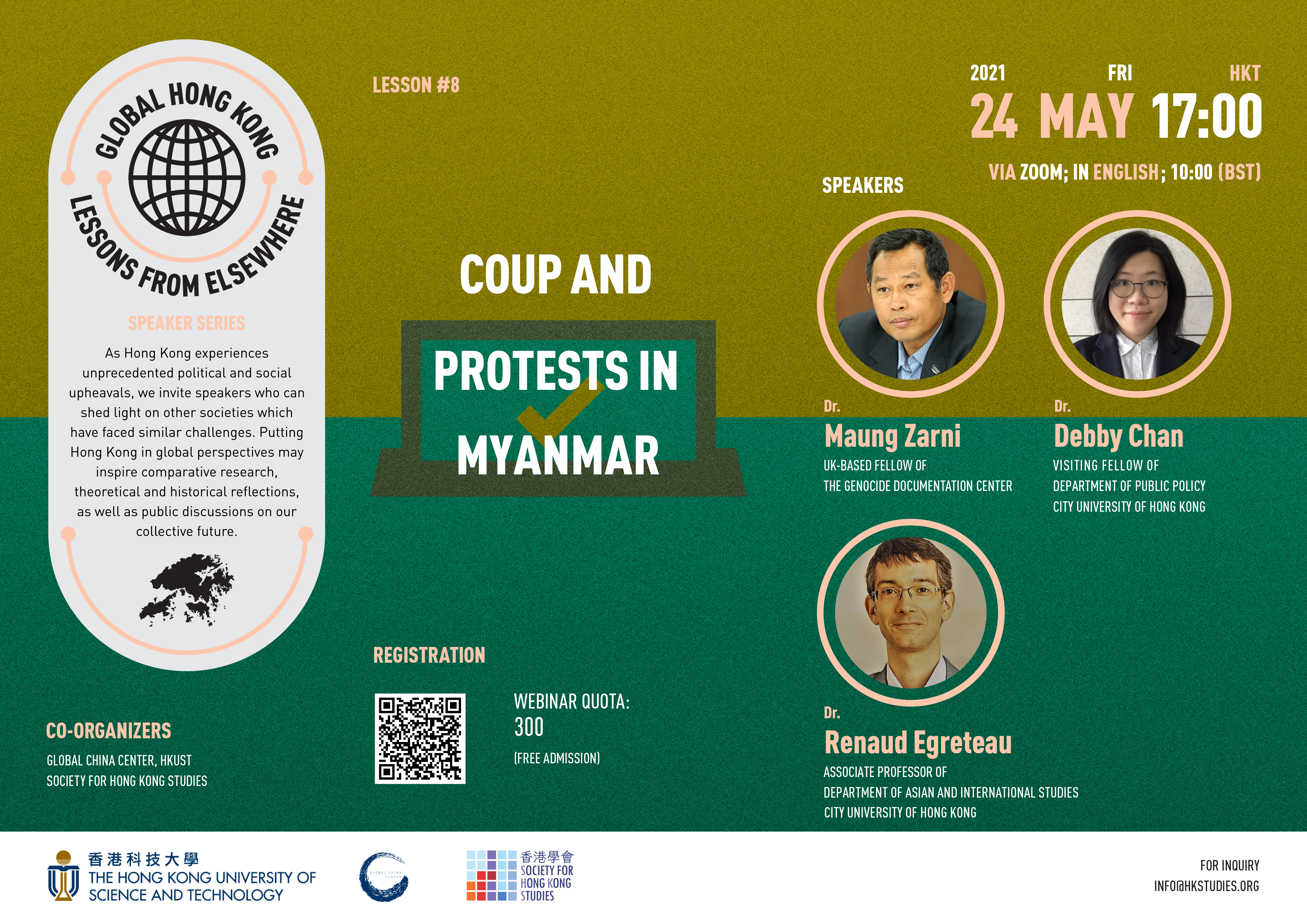
Coup and Protests in Myanmar
Zoom
by Dr. Renaud EGRETEAU (CityU of HK) , Dr. Maung Zarni and Dr CHAN, Sze Wan Debby(CityU of HK) on 24th May 2021 (Mon) 17:00 (HK), 10:00 (UK) READ MORE...
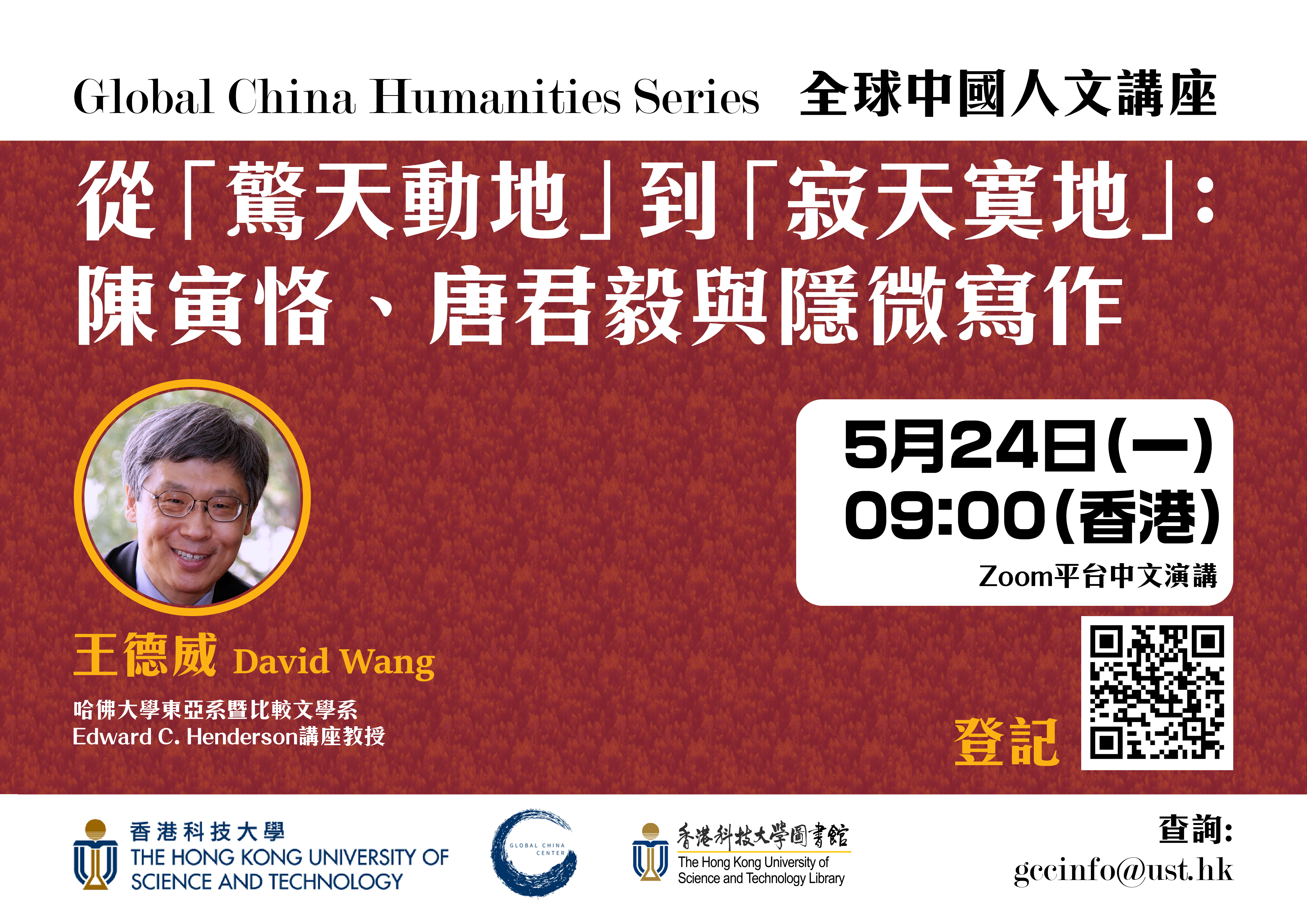
從「驚天動地」到「寂天寞地」:陳寅恪、唐君毅與隱微寫作
Zoom
一九四九年新中國成立,知識分子面臨重大抉擇。陳寅恪南下廣州,唐君毅輾轉來到香港。五十年代兩人治學方向都有微妙轉圜:陳寅恪研究《再生緣》及柳如是傳奇,唐君毅則在《中國文化之精神價值》中評鑒傳統戲曲及說部。世變之際,文學成為兩人觀照歷史、辯證思想的方法。陳寅恪自謂頌紅妝之事,以待來者;唐君毅更藉《水滸傳》反省生命從「驚天動地」到「寂天寞地」的道理。他們字裡行間所留下的暗碼系統,召喚我們在不同的時代作出不同的解讀。 READ MORE...
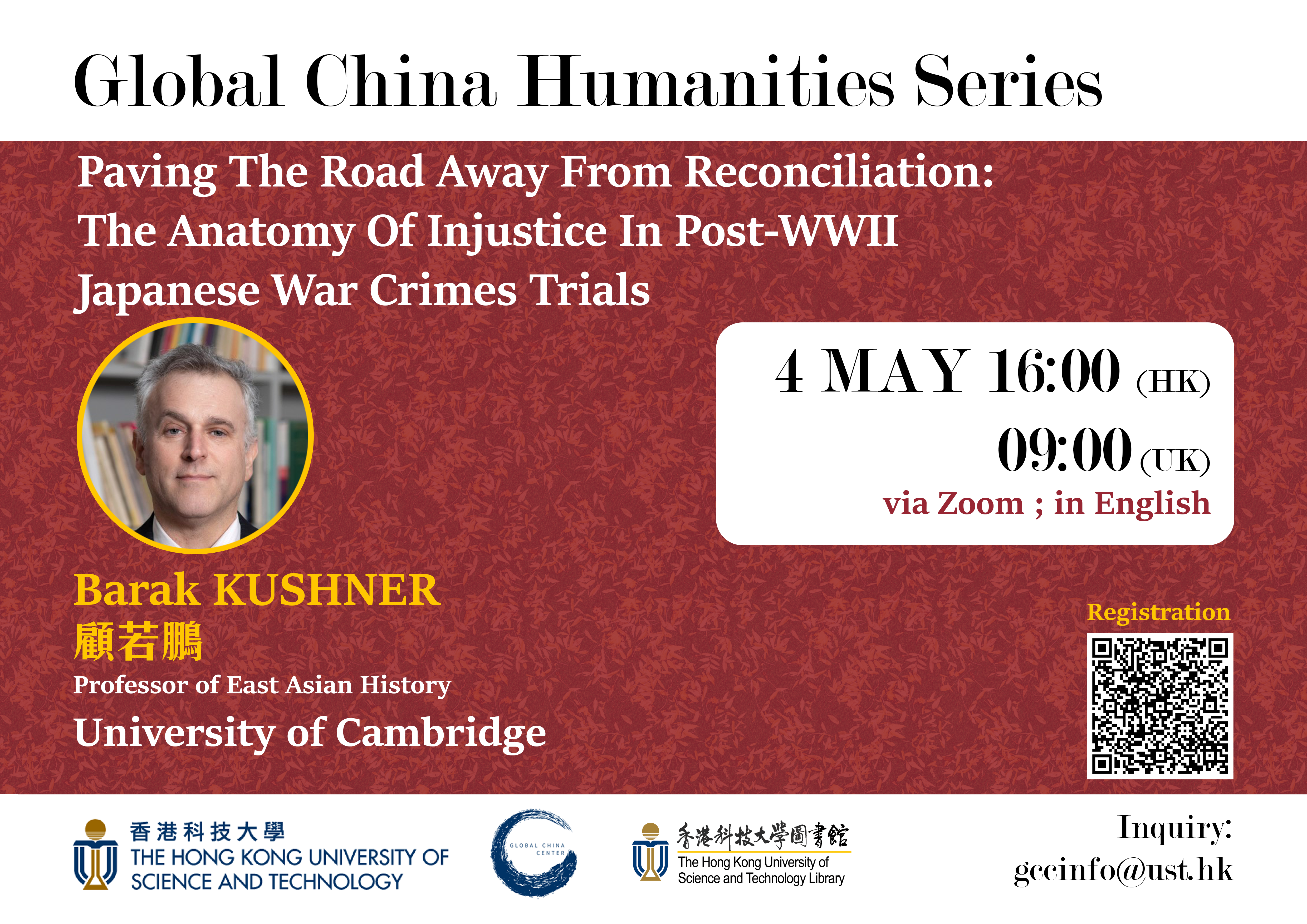
Paving The Road Away From Reconciliation: The Anatomy Of Injustice In Post-WWII Japanese War Crimes Trials
Zoom
The Tokyo Trial, 1946-1948, and the lesser BC class war crimes trials throughout East Asia of former Japanese soldiers, never get mentioned with the same hushed tones of legal reverence as the Nuremberg Tribunal of Nazis. Why did justice seemingly fail in East Asia when theoretically the same international law was pursued on both sides of the globe? Put another way, if Nuremberg bequeathed an academy to carry forth into the next generation the Nuremberg Principles, what happened in war crimes courts in East Asia that rendered such notions legally impotent? This talk investigates how a history of injustice developed in postwar East Asia and how it came to wield the potent political force it manifests today. READ MORE...
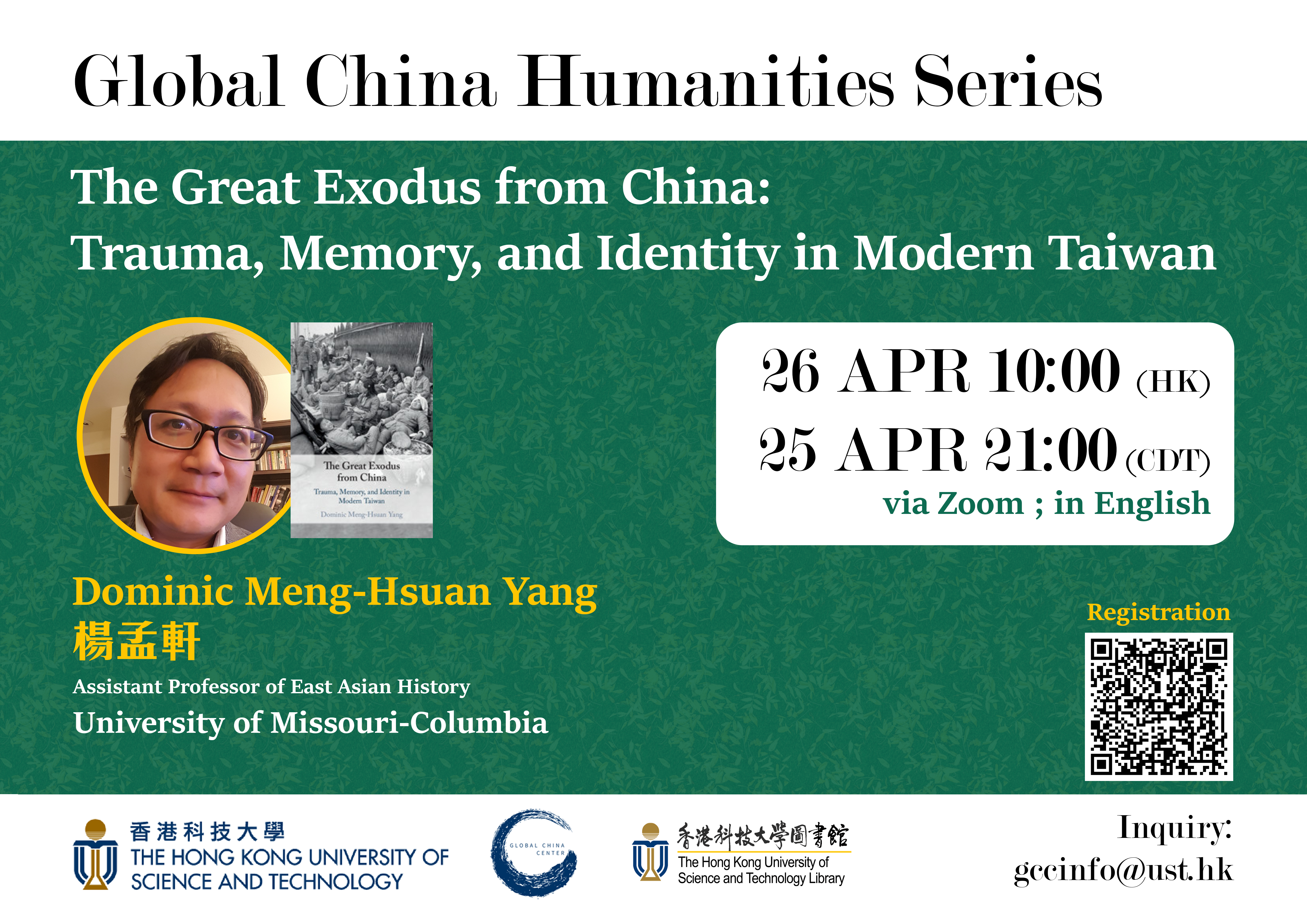
The Great Exodus from China: Trauma, Memory, and Identity in Modern Taiwan
Zoom
The Great Exodus examines the forced migration from China to Taiwan in 1949 when Chiang Kai-shek’s Nationalist regime collapsed on the mainland. The migration has largely been understood as a military withdrawal operation or a relocation of government. As such, this mass emigration remains one of the least understood population movements in modern East Asia. Peeling back layers of Cold War ideological constructs on the subject, Yang breaks new ground in Chinese Civil War historiography. He lays bare the traumatic aftermath of the Chinese Communist Revolution for the hundreds of thousands of ordinary people who were forcibly displaced across the sea and for the local Taiwanese who were compelled to receive them. The book underscores displaced population’s trauma of living in exile and their poignant “homecomings” in both post-Mao China and post-liberalization Taiwan. It presents a multiple-event trajectory of repeated traumatization with recurring but different memory productions through time in search of home, belonging, and identity. This trajectory challenges established notions of trauma, memory, and diaspora. It speaks to the importance of subject position, boundary-crossing empathic unsettlements, and ethical responsibility of historians in writing, researching, and representing trauma. READ MORE...

The Great Transformation: China’s Road from Revolution to Reform, 1969-1984
Zoom
This joint book project with Professor CHEN Jian attempts to provide an easily accessible survey of key developments in what is arguably the most important political, social, and economic transition of the 20th century: China's road from an isolationist revolutionary state to a pragmatic market-oriented regime. By reviewing both China’s domestic and international affairs during its ‘long 1970s’ – from the Ninth Party Congress and the Sino-Soviet clashes in the spring of 1969 up to the Twelfth Party Congress and the opening to the outside world in the early 1980s – the project intends to stress three key themes: The end of the revolutionary phase in Chinese Communist politics, the beginning of a new international orientation for the PRC, and the creation of a new economic system, built from above and from below, that set the stage for the remarkable growth of the 1980s and ‘90s. READ MORE...