A poster for a Chinese high-speed train at the construction site for a bridge over the Mekong River in Laos
Upcoming Events
Past Events
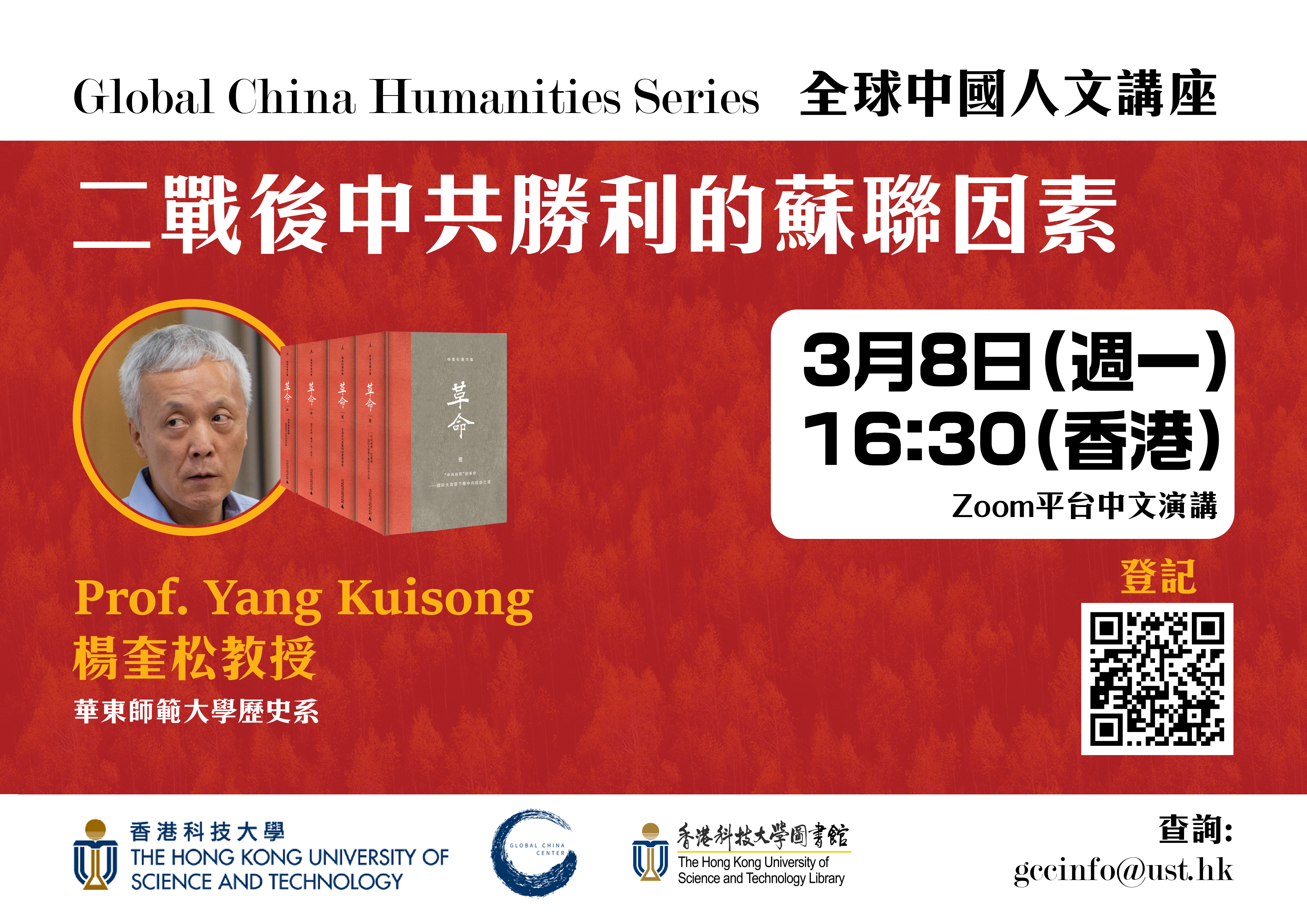
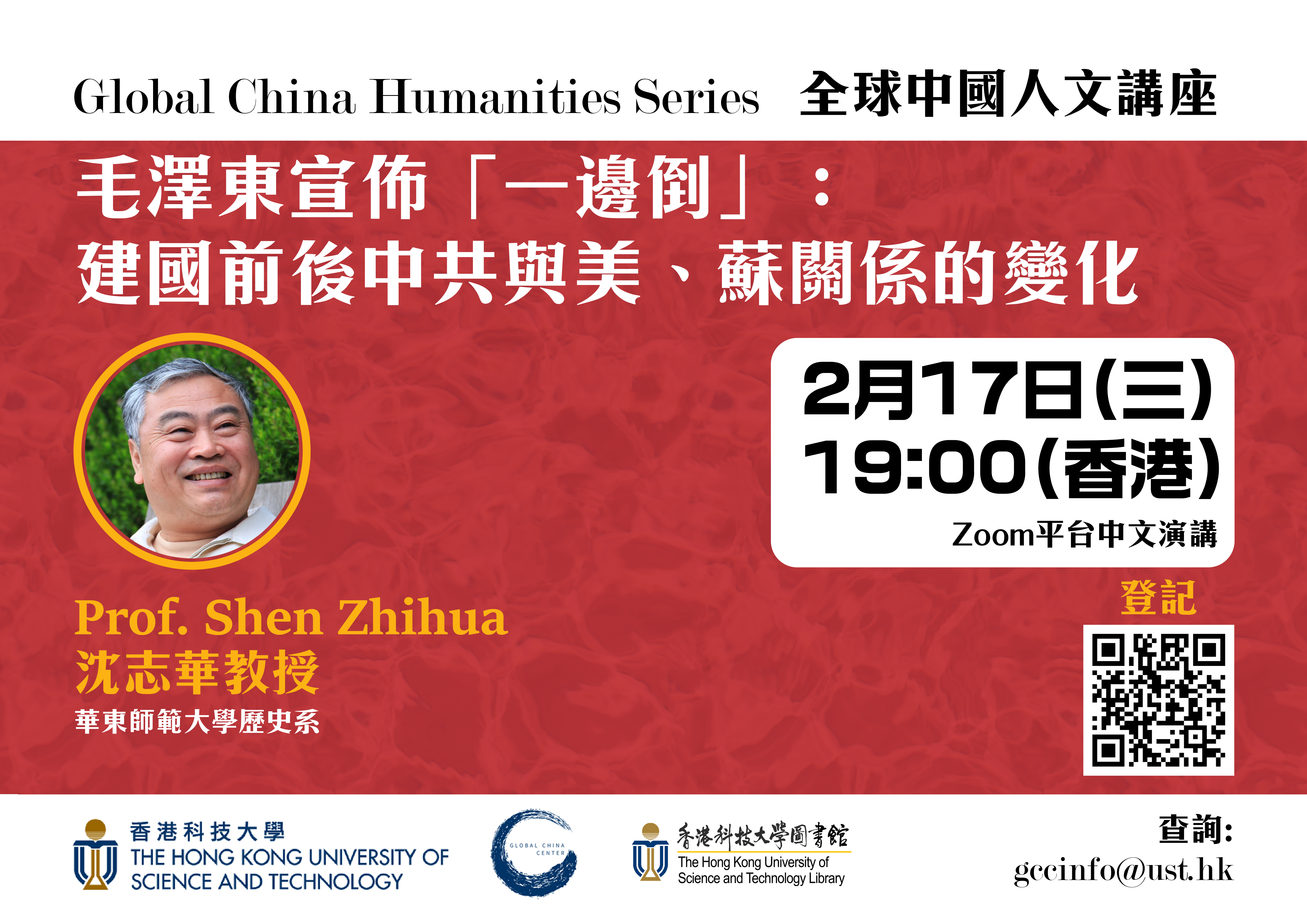
二戰後中共勝利的蘇聯因素問題
Zoom
二戰結束、日本投降後的國際國內形勢,並不利於中共用武力推翻國民黨政權。導致蔣介石國民黨失敗的原因很多,任何原因都不是唯一重要的,但對中共的成功而言,蘇聯因素的作用卻是不可或缺的。蘇聯因素的作用是多方面的,蘇軍佔領東北期間武器彈藥方面的協助對中共武裝在東北發展壯大至關重要,然而中共武裝能夠進入東北、在東北廣大區域利用中東鐵路等交通設施,包括能夠在和國民黨作戰期間出入朝鮮、外蒙,利用蘇軍控制的旅大地區等等,顯然是意識形態的因素,以及斯大林基於冷戰思維調整其對美對華政策所帶來的結果。換言之,毛澤東1949年7月公開發表《論人民民主專政》一文,宣布向蘇聯“一邊倒”;1950年2月締結中蘇友好互助同盟條約,毛澤東宣稱這是為中國找到一個“好幫手”,其實都可以看出中共對其戰後成功有著怎樣的經驗總結。 READ MORE...
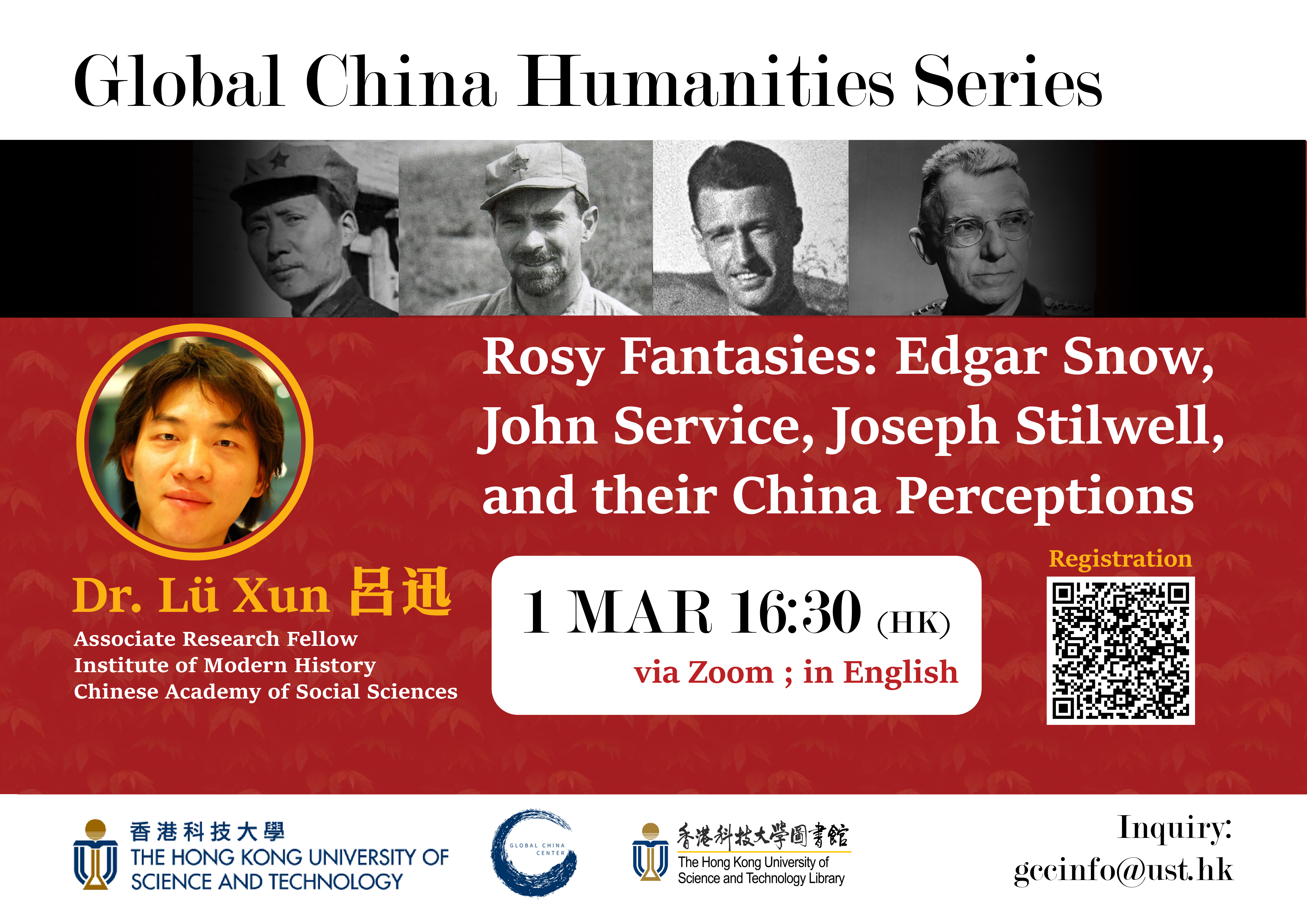
Rosy Fantasies: Edgar Snow, John Service, Joseph Stilwell, and their China
Zoom
Edgar Snow, John S. Service, and Joseph W. Stilwell had overlapping and intertwined China experiences. They played unexpectedly pivotal roles in the rise of the Chinese Communist Party (CCP). Edgar Snow (1905-72) was a foreign correspondent in China from 1928 to 1941 and returned to the country in 1960, 1964-65, and 1970. He promulgated what was to later become prevailing imagery of the Chinese Communists as agrarian reformers. Born to an American missionary family in Chengdu, John S. Service (1909-99) served as a diplomat to China from 1933 to 1945 and revisited the country in 1971. Taking part in the Dixie Mission to Yan’an, Service emerged as Washington’s major source of information on the CCP. Old China Hand General Joseph W. Stilwell (1883-1946) was stationed in China in 1920-23, 1935-39 and 1942-44. He played a crucial role in changing American perceptions of the Chinese Communists and Chinese Nationalists. Snow, Service, and Stilwell all claimed to sincerely love the Chinese people. But what did they really think of China? This study will zoom in on their perceptions of China as expressed in their own words and deeds and explore how their perceptions impacted the course of history. READ MORE...
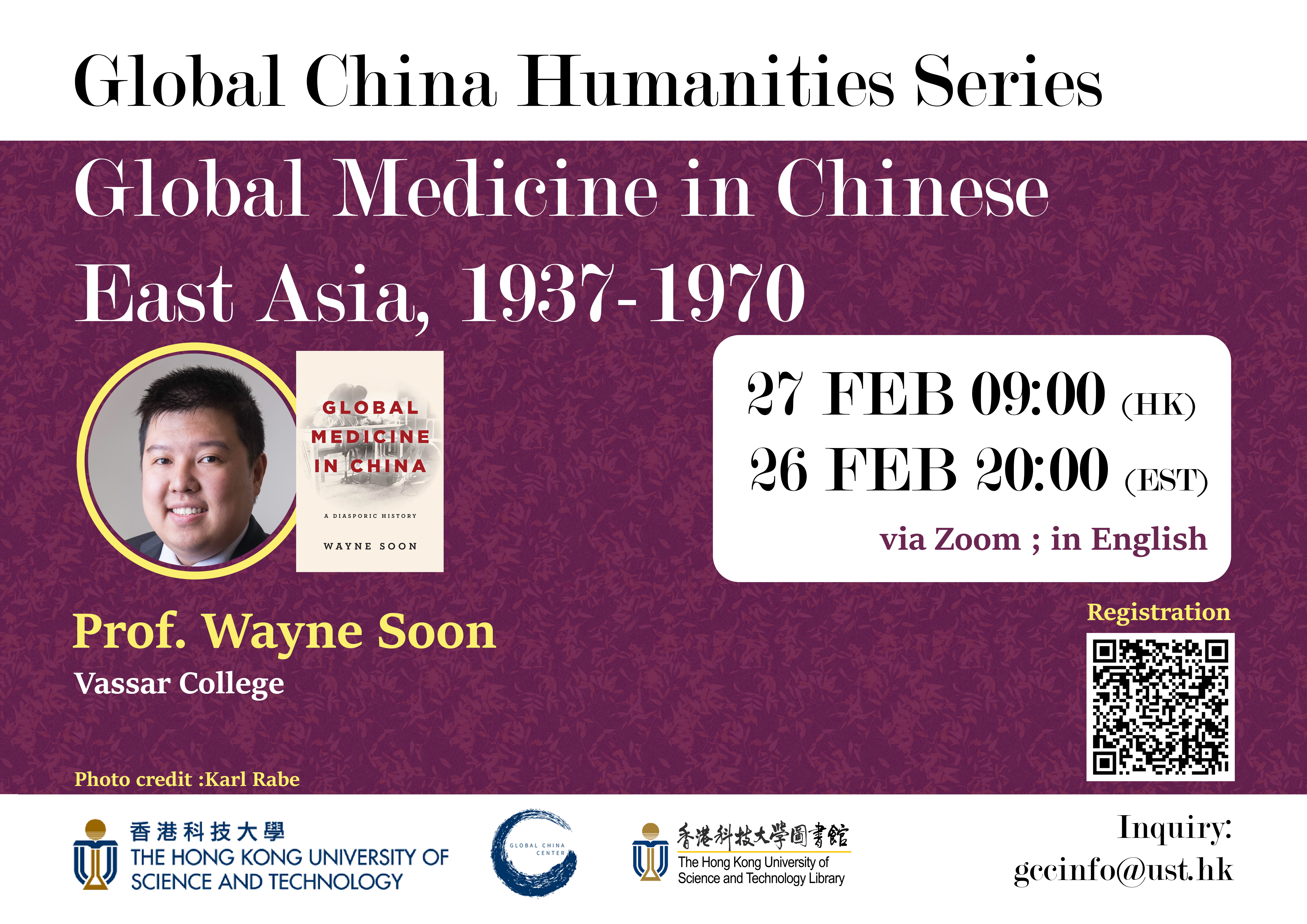
Global Medicine in Chinese East Asia, 1937-1970
Zoom
By examining two case studies on how the Chinese diaspora came to shape biomedicine in China and Taiwan from 1937 to 1970, my new book makes the case of the concept of "global medicine." "Global medicine" highlights the multivalent and multidirectional flows of medical practices and ideas circulating the world that shaped Chinese East Asia in the 20th century. The first case study examines how Chinese American women medical personnel established the first Chinese blood in New York and Kunming, China. Second, this talk reveals how Singapore-born and Edinburgh-educated Dr. Robert Lim successfully relocated the National Defense Medical Center from China to Taiwan in 1948 despite the Chinese Civil War's longstanding challenges. This presentation highlights the critical intersections of scientific expertise, political freedoms, and diasporic power in shaping global medicine in China and Taiwan through a critical examination of these two medical encounters between the diaspora and the local Chinese and Taiwanese. READ MORE...
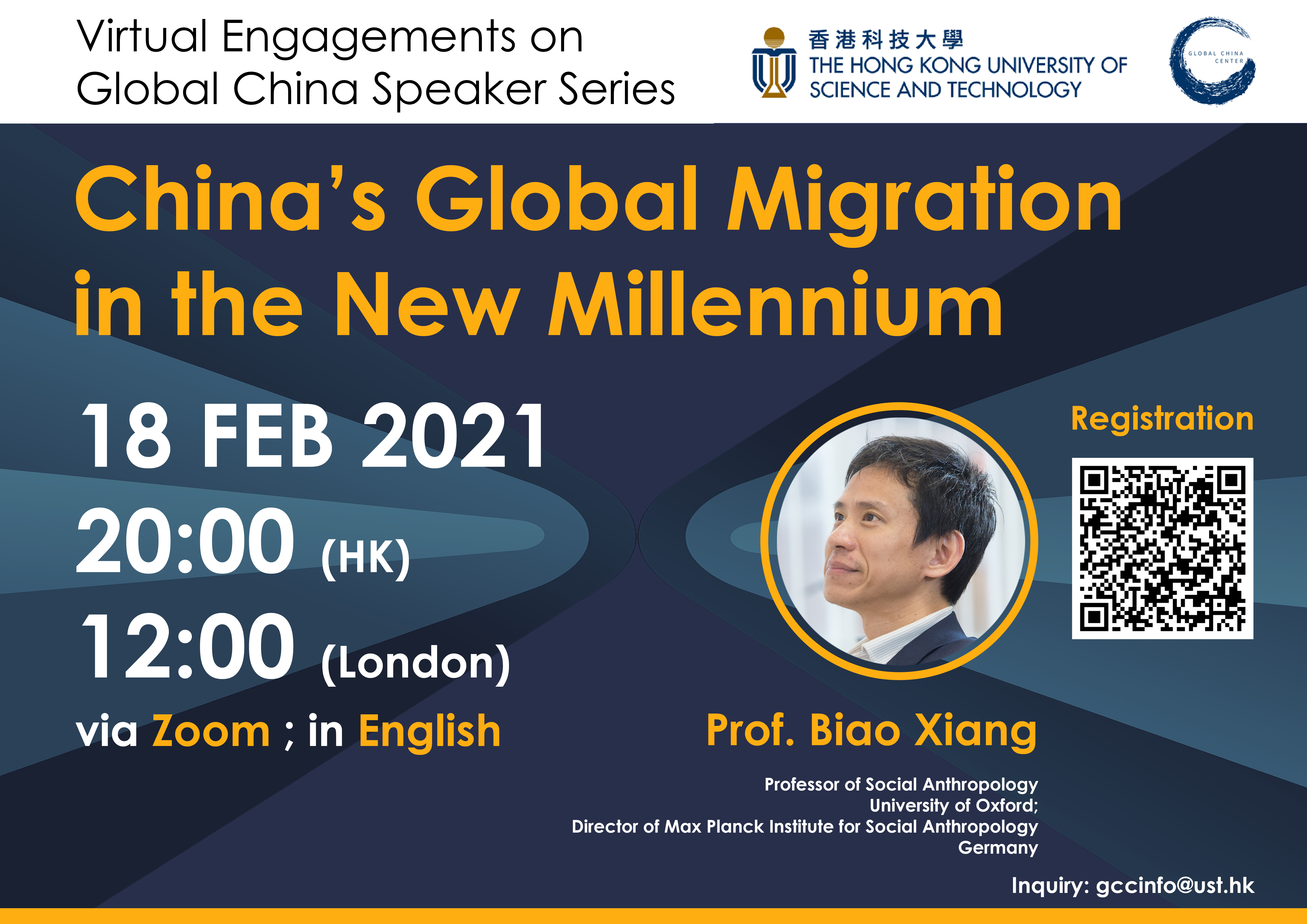
China's Global Migration in the New Millennium
Zoom
China is the world’s largest source country of migrant students (making up 14% of the global total in 2018) and investors (PRC investors made up 75% of the recipients of US EB-5 visas in 2017). Why are those who have benefited the most from China’s development eager to leave China, the rising centre of the world economy? This lecture suggests that China’s global migration in the new millennium reflects the internationalization of life reproduction among those who have means. Chinese migrate overseas in order to benefit from better education, care, air, food and water, and personal and wealth security. They do so with considerable financial cost. All these benefits are meant to maintain and enhance life, instead of making money, thus “reproduction”. This lecture positions China’s on-going outflows in a historical context, and explores the relations between migration, capital accumulation, and shifts in the global political economy. READ MORE...
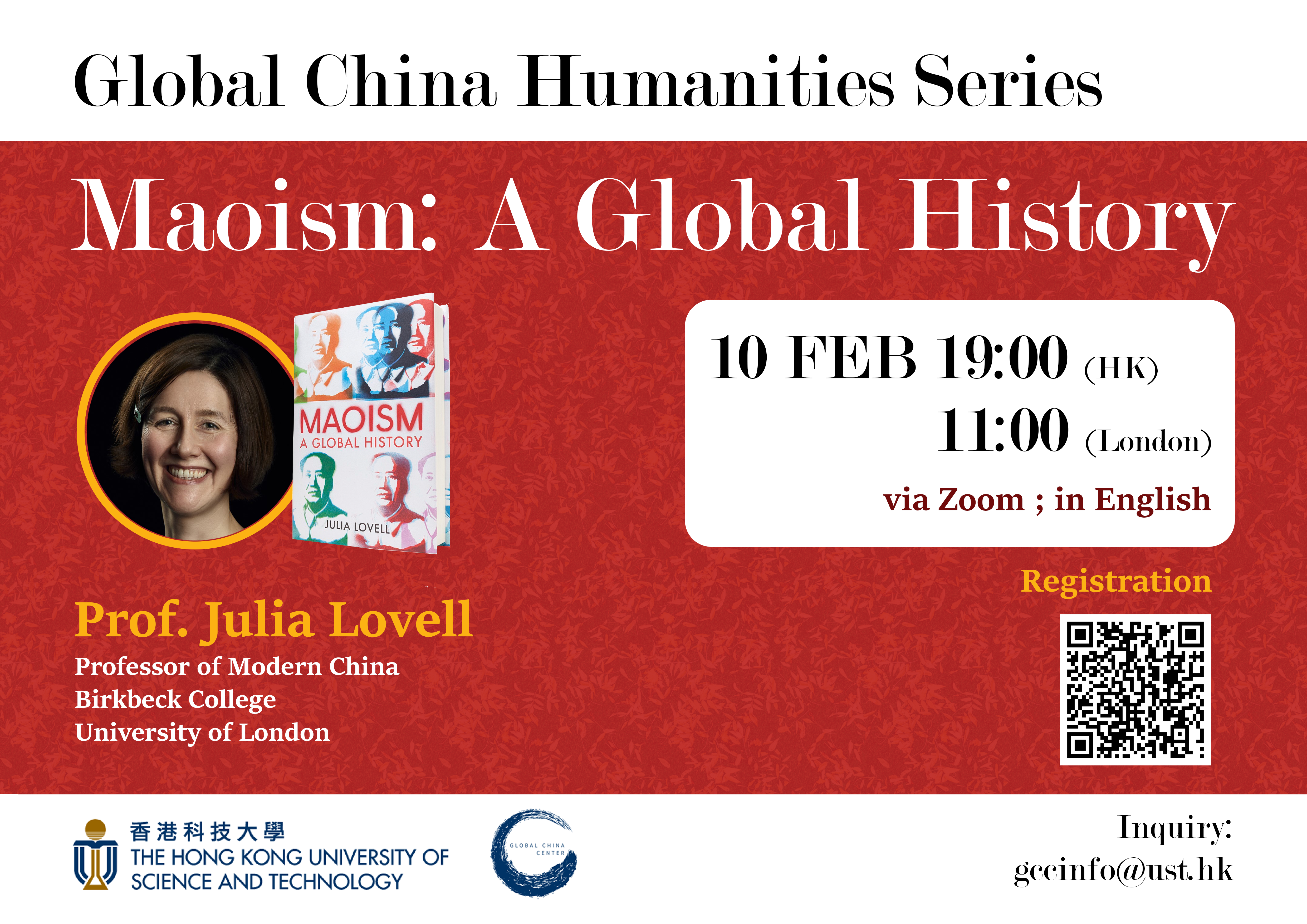
Global China Humanities Series: Maoism: A Global History
Zoom
Since 2012 – and for the first time since the death of Mao in 1976 – China has experienced an official revival of Maoist culture and politics. Despite the huge human cost of Mao’s rule, on 1 October 2019 (the 70th anniversary of the founding of the People’s Republic of China) the Chinese Communist Party staged a festival of patriotism invoking Mao as august builder of the party and nation. But this definition of Mao as respectable paterfamilias obscures other, more destabilising legacies of Maoism – a volatile mix of militarised autocracy, anti-colonial rebellion and ‘continuous revolution’.... READ MORE...

"Global Hong Kong: Lessons from Elsewhere" Speaker Series - Book event: The Resistant Community (反抗的共同體)
Microsoft Teams
To many Hong Kong locals, Prof. Ma Ngok needs no introduction. Well known and respected for his commentary on Hong Kong politics and academic archievement in political science, Ma is Associate Professor of the Department of Government and Public Administration of CUHK. His research areas include party politics and elections in Hong Kong, social movements and state-society relations in Hong Kong, comparative politics, and democratization. He has published five books, more than 20 journal articles and 20 book chapters on Hong Kong politics.
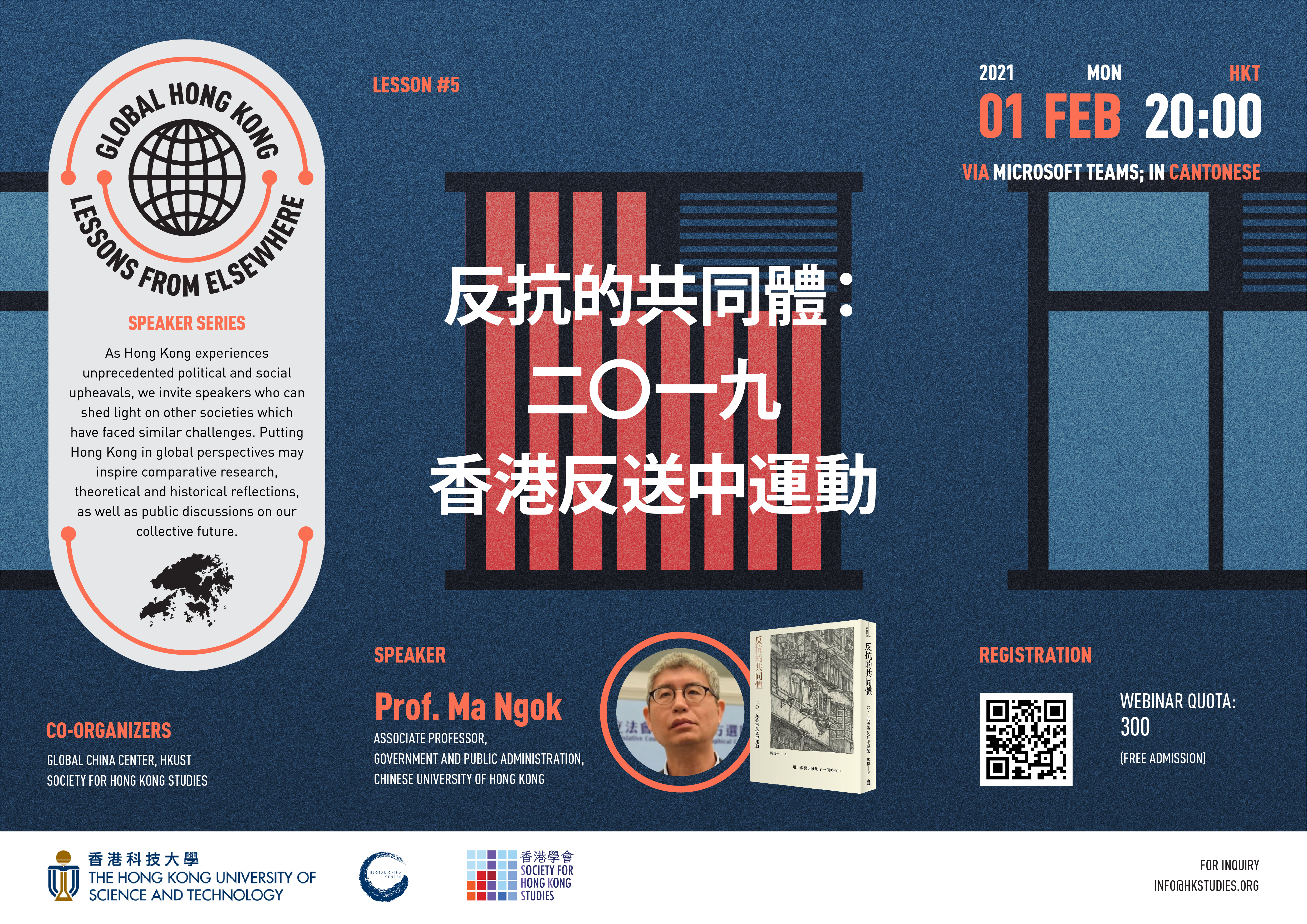
Book event: The Resistant Community (反抗的共同體)
Microsoft Team
About the "Global Hong Kong: Lessons from Elsewhere" Speaker Series
As Hong Kong experiences unprecedented political and social upheavals, we invite speakers who can shed light on other societies which have faced similar challenges. Putting Hong Kong in global perspectives may inspire comparative research, theoretical and historical reflections, as well as public discussions on our collective future.
READ MORE...
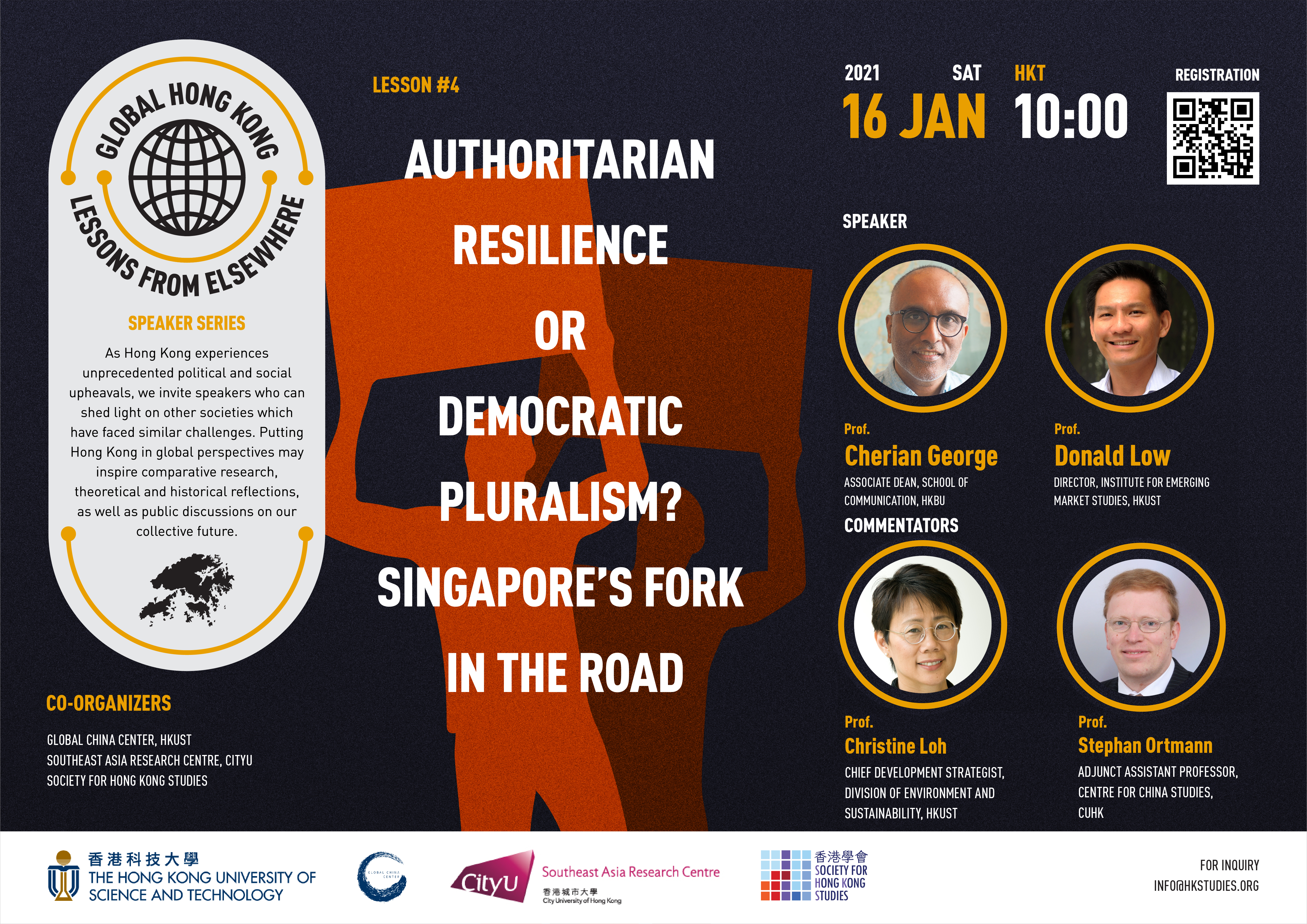
Global Hong Kong Speaker Series: Authoritarian Resilience or Democratic Pluralism? Singapore’s Fork in the Road
Zoom
About the "Global Hong Kong: Lessons from Elsewhere" Speaker Series
As Hong Kong experiences unprecedented political and social upheavals, we invite speakers who can shed light on other societies which have faced similar challenges. Putting Hong Kong in global perspectives may inspire comparative research, theoretical and historical reflections, as well as public discussions on our collective future.
READ MORE...
Global China Humanities Series
to
Online Event
The Center launches its inaugural Global China Humanities Lecture Series in February 2021. We invite internationally renowned scholars and young, first-book authors to discuss their latest works on topics ranging from Cold War history, diaspora studies, global medicine to literature. READ MORE...