Upcoming Events
Past Events
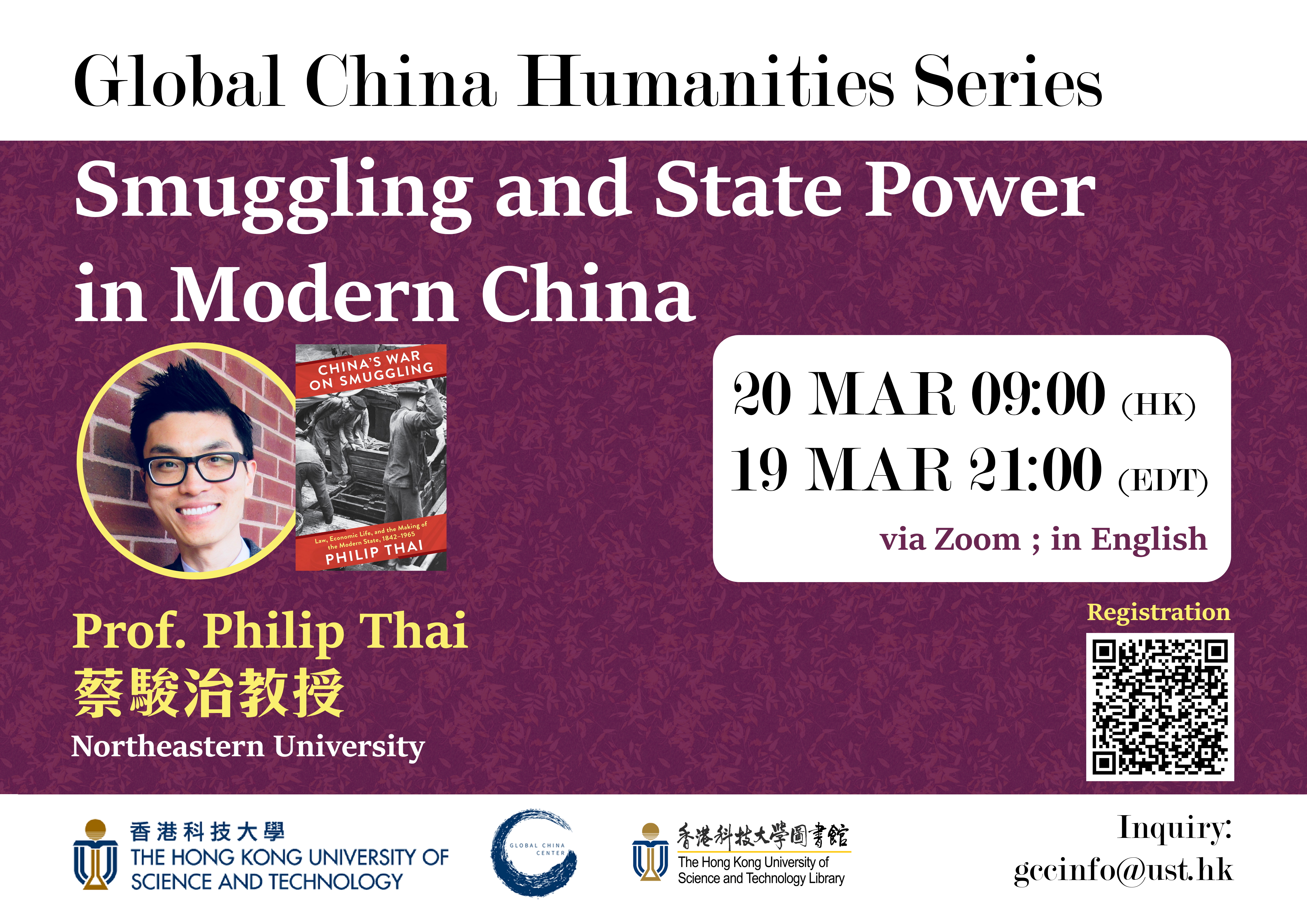
Smuggling and State Power in Modern China
Zoom
Smuggling along the Chinese coast has long been a thorn in the side of many regimes. From opium concealed aboard steamships in the Qing dynasty to wristwatches trafficked in the People’s Republic, contests between state and smuggler have exerted a surprising but crucial influence on the political economy of modern China. Seeking to enforce trade regulations and protect critical revenues, successive governments from the late Qing through the early People’s Republic have violently cracked down on smuggling. Tighter regulations, higher taxes, and harsher enforcement all helped to consolidate domestic authority and confront foreign challenges. But these bold interventions did much more. They also sparked widespread defiance, triggering further coercive measures. Smuggling thus animated a paradoxical dynamic in China’s history: it simultaneously threatened state power while inviting repression that strengthened state authority. This lecture chronicles the history of smuggling in modern China by looking at its practice, suppression, and significance. It argues that the fight against smuggling was not simply a law enforcement problem but an impetus to expanding state capacity, broadcasting state authority, and transforming everyday life. Indeed, while smuggling might have operated on the margins of the law, it was far from marginal in remaking China. READ MORE...
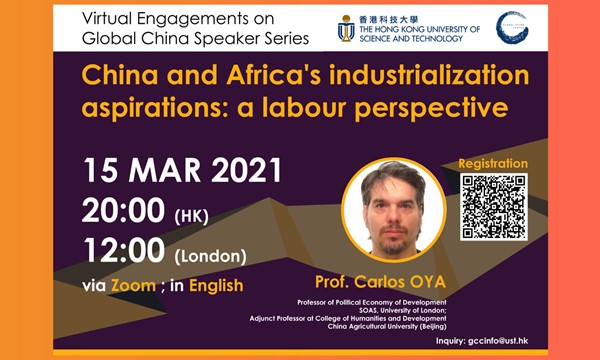
VIRTUAL ENGAGEMENTS ON GLOBAL CHINA" SPEAKER SERIES - China and Africa's industrialization aspirations: a labour perspective
Online
About "Virtual Engagements on Global China" Speaker Series
This public lecture series features international scholars and experts on a wide range of topics related to China's global presence and impacts. Each seminar will begin with a 30-min presentation, followed by another 30 mins of Q&A. The series is free and open to the global public. Participants must register before each seminar.
READ MORE...