
Upcoming Events
Past Events

Migration in the Time of Revolution: China, Indonesia, and the Cold War
What happens when geostrategic collaborations between states intersect with ethnic tensions? In response to this question, this talk examines how two of the world’s most populous countries interacted between 1945 and 1967, when the concept of citizenship was contested, political loyalty was in question, national identity was fluid, and the boundaries of political mobilization were blurred. Even though China and Indonesia do not share geographical borders, the existence of 2.5 million ethnic Chinese in Indonesia—many of whom had economic influence but an unclear citizenship status—gave rise to a porous social frontier. Through their everyday social, political and economic practices, “ordinary” Chinese diaspora influenced bilateral diplomacy. Their life experiences were shaped by but also helped shape the trajectory of governmental relations. READ MORE...
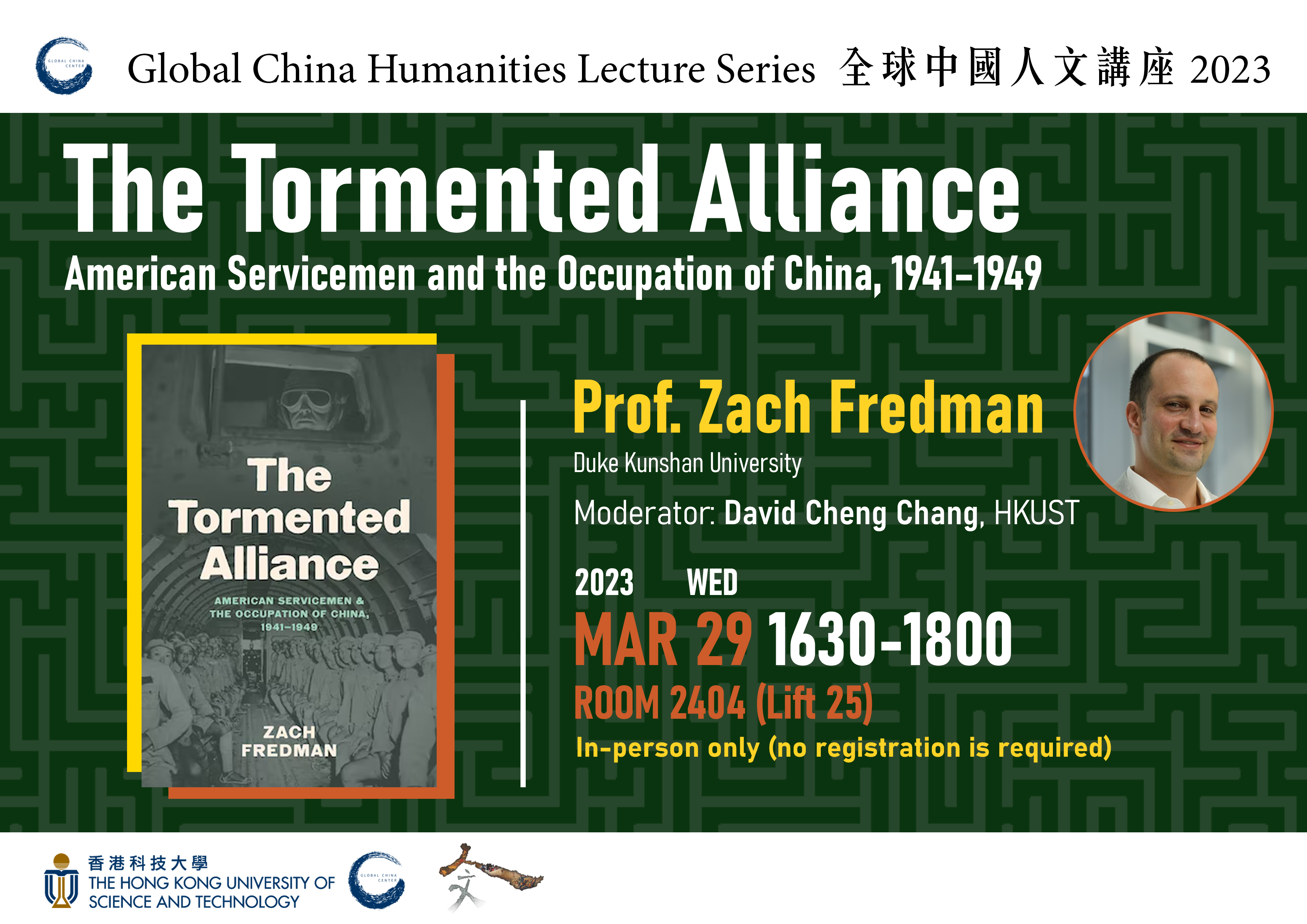
The Tormented Alliance: American Servicemen and the Occupation of China, 1941–1949
Zach Fredman’s The Tormented Alliance examines the formation, evolution, and undoing of the alliance between the United States and the Republic of China during World War II and the Chinese Civil War. Drawing on English and Chinese-language sources from all areas of China where US forces deployed during the 1940s, I show how each side brought to the alliance expectations that the other side was simply unable to meet, resulting in a tormented relationship across all levels of Sino-American engagement. Entangled in larger struggles over race, gender, and nation, the U.S. military in China transformed itself into a widely loathed occupation force: an aggressive, resentful, emasculating source of physical danger and compromised sovereignty. After Japan's surrender and the spring 1946 withdrawal of Soviet forces from Manchuria, the U.S. occupation became the chief obstacle to consigning foreign imperialism in China irrevocably to the past. Chinese leader Chiang Kai-shek lost his country in 1949, and the U.S. military presence contributed to his defeat. The occupation of China also cast a long shadow, establishing patterns that have followed the U.S. military elsewhere in Asia up to the present. READ MORE...